
Labor Day: From Strike to Holiday. Discover how the Pullman Strike turned protest into a national holiday and why it still matters today.
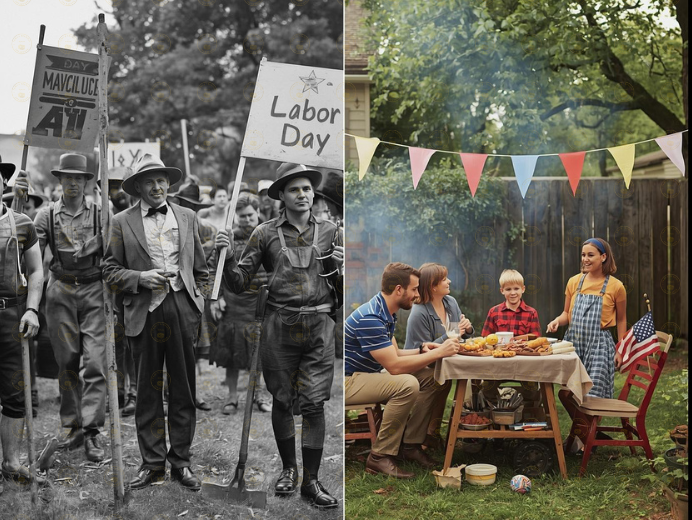
The mere mention of Labor Day conjures up images: the changing colors of the season, the cooler days, and the glorious aroma of grilling burgers, hot dogs, and steaks. The satisfying thud of a football being caught, children shouting and laughing in the distance, and maybe even a guilty pang of conscience about not having lifted a finger all day. But have you ever stopped to think about what this three-day weekend is really about?
The true story of Labor Day is far more compelling than you average backyard barbecue. It’s a celebration of grit, determination, and a whole lot of hard-won victories for the working class of our country. A historical drama; if you will, with more twists and turns than a season of your favorite reality or crime show.
This isn’t just a holiday; it’s a testament to the power of the collective action of the working class. To fight for fair treatment, better wages, and the addition of safety regulations. So, grab a frosty beverage (Iced tea for the purists, something stronger for the rebels!), settle in, and let’s get into the surprisingly juicy history of Labor Day. Because this ain’t your grandma’s history lesson! (Well, unless your grandma was a radical labor organizer!)
Life Before Labor Day: Harsh Conditions and Long Hours
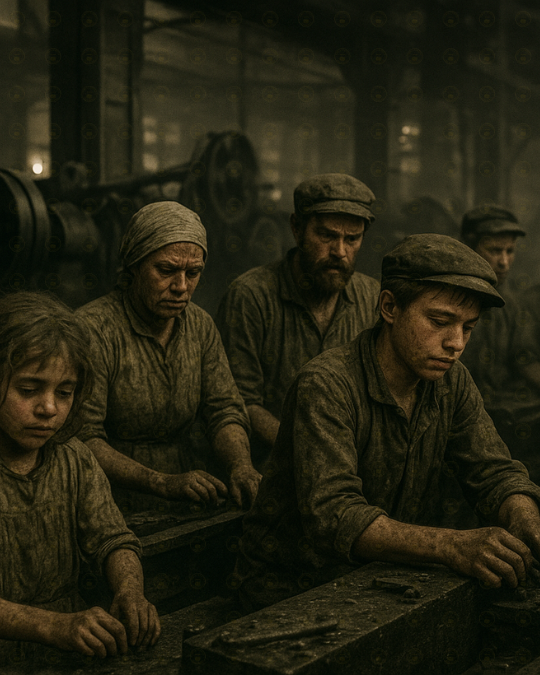
Before we had a dedicated day to celebrate workers, the working conditions in the late 19th century were; should we say, less than ideal. Imagine a time where the standard workday stretched an agonizing 12 hours, six or even seven days a week. Picture grimy factories and canneries, dangerous mines, and so many other manual labor jobs that lacked even the most basic safety measures.
Furthermore, workers faced not only grueling conditions but also exploitative wages and a complete lack of worker protection. Children, often as young as six worked alongside adults, their tiny hands contributing to the industrial machine. (The 1900 census revealed that there was approximately 2 million children working in mines, mills, factories, fields, stores and on city streets across the United States.) And tragically, death was a familiar visitor to many workplaces. (Learn more about the battle for Child Labor Laws here.)
Sound like fun? Probably not. This was the harsh reality for millions of workers during a period in history that is often romanticized, but one that was brutal for many in the workforce. This era saw the rise of powerful labor unions, groups of workers banding together to demand better wages, shorter hours, and safer working conditions.
This wasn’t simply a case of “tough times”. These weren’t isolated incidents; they were systemic issues fueled by unchecked corporate greed and a largely indifferent government. This era, ironically dubbed the “Gilded Age” for its outward appearance of prosperity, when in reality it was anything but golden for the working class.
The Rise of Labor Unions and the Fight for Workers’ Rights
Enter the labor unions; the unlikely heroes of our story. These weren’t just quiet polite groups requesting a raise; they were organized movements of workers, demanding better wages, shorter hours, and most importantly, safety. Think of them as the original “employee review” group. But instead of passive-aggressive emails, their methods included strikes, boycotts, and sometimes, unfortunately, violent clashes with authorities and company thugs.
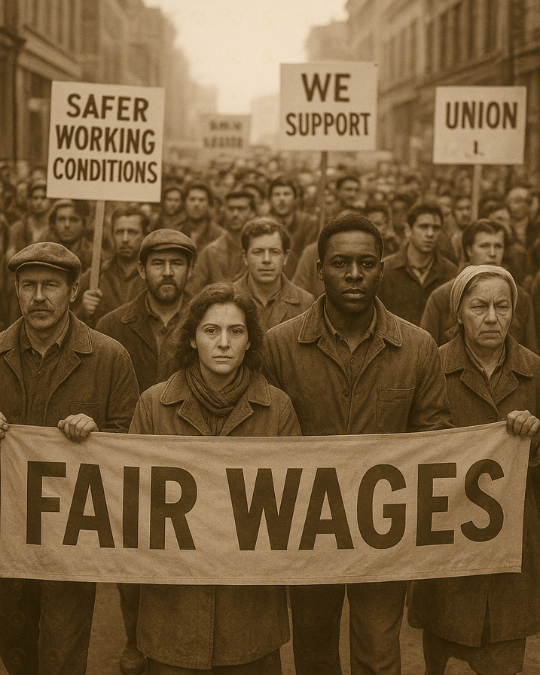
These were powerful demonstrations of solidarity, fueled by a shared desire for a better life. Unions fought for things we now take for granted: the eight-hour workday, the abolishment of child labor, and workers’ compensation. These were monumental victories at a very high cost. These brave individuals were the unsung heroes who laid the groundwork for the Labor Day holiday we enjoy today. Many risked their jobs, their freedom, and even their lives in the fight for workers’ rights. They deserve a place in history far greater than a footnote.
The Origin of Labor Day: Who Founded It?
Now, here’s where things get interesting. The origin of Labor Day story is shrouded in a bit of historical fog, like a poorly-lit 19th-century photograph. Several cities claim to be the birthplace of the holiday, igniting a historical debate.
Labor Day traces its beginnings to the late 1800s when American workers demanded recognition for their contributions. In1882, labor activists in New York City organized the first parade. Thousands of workers marched proudly, followed by a festival for families. this event was designed to highlight the unity and strength of labor, while also giving workers a much-needed day of rest.
The idea quickly gained support. Municipal ordinances appeared in 1885 and 1886, and Oregon became the first state to pass a Labor Day law in1887. States like Colorado, Massachusetts, and New York soon followed. By 1894, 23 states had created their own Labor Day holidays, proving how important the movement had become.
Who founded the holiday remains debated. Some credit Peter J. McGuire, a carpenter and union leader, while others name Matthew Maguire, a machinist from New Jersey. Both men were tied to the labor movement, and both attended that first parage in 1882. Regardless of who first proposed it, their vision shaped a holiday that celebrated workers and their role in building the nation. Read more about them here.
However, by the summer of 1894, the demand for a national holiday was undeniable.
Pullman Strike and the History of Labor Day
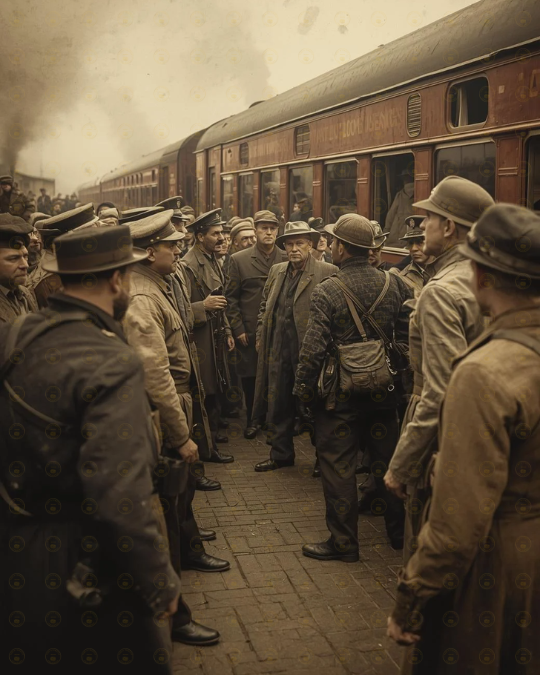
It began as a local labor dispute but quickly escalated into one of the most significant labor conflicts in U.S. history. Workers at the Pullman Company in Chicago, frustrated by wage cuts, high rents in their company-owned town, and harsh working conditions, walked off the job. When the company refused to negotiate, Eugene V. Debs and the American Railway Union (ARU) expanded the fight into a nationwide boycott of trains carrying Pullman cars.
At its height, the strike involved about 250,000 workers across 27 states, shutting down rail traffic and sparking violent clashes. The federal government, siding with the railroads, sent in troops to restore order. This led to deadly confrontations, destruction of property, and ultimately the collapse of the strike, with Debs imprisoned and the ARU dissolved.
The strike revealed deep tensions between workers and corporate power, especially when the government intervened on behalf of big business instead of labor workers. Public opinion was divided: many viewed the strikers as dangerous agitators, while others saw them as victims of exploitation. In the aftermath, a federal commission even condemned George Pullman’s paternalistic control over workers as “un-American.” Still, the damage was done. Furthermore, lives were lost, unions were weakened, and the distrust between laborers and the government grew stronger.
While the Pullman Strike shook the country with violence, destruction, and loss of life. To ease tensions and regain favor with workers, just three days after federal troops broke the strike, President Grover Cleveland signed legislation making Labor Day a federal holiday.
On June 28, 1894, Congress passed an act making the first Monday in September of each year a legal holiday. This wasn’t just a symbolic victory; it was a powerful affirmation of the workers’ struggle, a recognition of their contributions, and a testament to the enduring power of collective action. The holiday became a lasting tribute to the people who carried the nation forward.
Hence, Labor Day is not to be confused with the more radical May Day, which was tied to international labor movements. Labor Day was framed as a distinctly American way to honor workers while calming rising unrest. This political move was less about celebrating labor and more about damage control after one of the most explosive labor disputes in U.S. history. Ultimately, the Pullman Strike both exposed the struggles of working-class Americans and paved the way for the holiday we now know as Labor Day. You can learn more about The Pullman Strike by clicking here.
Labor Day Meaning: Workers’ Rights and Ongoing Struggles
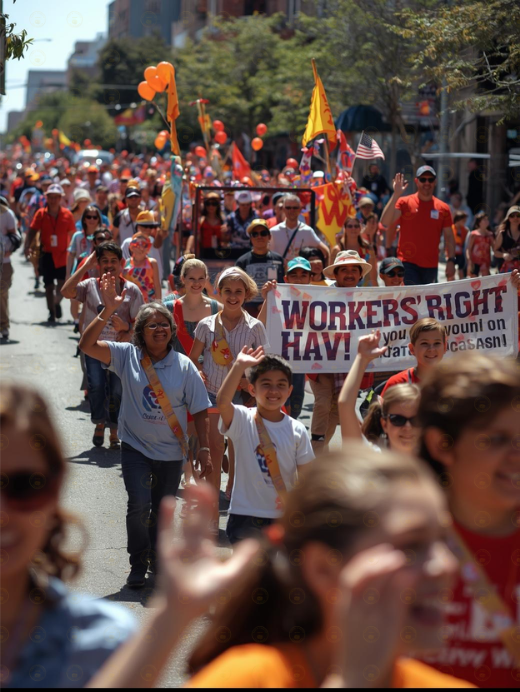
What does Labor Day “mean”? It is much more than just a long weekend. It is a chance to reflect on the struggles, achievements, and ongoing fight for workers’ rights. A day to appreciate the contributions of all working people. From the factory workers to the teachers, the doctors to the hospitality workers, and even the gig workers, as well as everyone in between.
It’s a reminder of the hard-fought battles that led to the improvements in working conditions that we enjoy today. Without the tireless efforts of those early labor activists, our workplaces and working conditions would look drastically different. I would even hazard a guess that it wouldn’t be for the better.
Therefore, Labor Day is a call to remember the sacrifices made to achieve fair wages, reasonable hours, and safe working conditions. It is to be a celebration of the dignity of the work and the value of every individual contributing to society. A holiday that should inspire us to continue advocating for fair labor practices, not just for ourselves, but for everyone.
Labor Day Today: Carrying the Torch
Today, Labor Day celebrations are diverse, ranging from traditional parades and picnics to more modern expressions of solidarity and activism. While the backyard barbecues are a popular way to celebrate, many also use the day to participate in community events, support local businesses, and reflect on the ongoing fight for workers’ rights and economic justice.
Labor Day remains a vital reminder of the ongoing battle for fair wages, better benefits, safer working conditions, and workers’ rights. It serves as a yearly reminder that we must continue to work towards creating a society where all workers are treated with dignity and respect. Where hard work is rewarded, and everyone has the opportunity to succeed.
The spirit of Labor Day isn’t just about resting. It’s about remembering the past, celebrating the present, and working towards a better future for all workers. So, while you enjoy that delicious barbeque; created by the workers in your circle of friends and family, take a moment to appreciate the long and fascinating journey that led to this day off. Maybe even consider contributing to a cause that supports workers’ rights. After all, even a little bit of action can make a difference, and that is truly something to celebrate.
Modern Labor Challenges: Gig Economy, Healthcare Workers, and Wages
Moreover, the fight continues on multiple fronts, with battles being waded across various industries and locations:

- The Fight for Unionization in the Gig Economy: The gig economy has shake things up for workers. Driving, delivering, freelancing etcetera: it sounds flexible, but most gig workers don’t ger the protections or benefits traditional employees do. No health insurance, no retirement plans, and often no safety net at all. That gap has led to heated debates and courtroom battles over fair pay, worker classification and the right to unionize. At its core, it is the same fight for fair treatment, just in a modern setting.
- Healthcare Workers’ Struggle for Adequate Staffing and Protection: The COVID-19 pandemic made long-standing problems in healthcare impossible to ignore. Hospitals, Nursing Homes, and many others, faced severe staffing shortages. Workers were stretched to the breaking point, and safety was often compromised. Nurses, doctors, and support staff fought to get enough protective equipment and fair working conditions. Their struggle didn’t end when the pandemic eased. It continues today, showing just how important it is to stand up for the wellbeing of essential workers who keep our communities running. (And not just in the medical field!)
- The Ongoing Fight for a Fair Minimum Wage: Even with some progress over the years, the fight for a livable minimum wage is still front and center for many workers. In lots of places, the cost of living keeps climbing faster than wages, leaving hardworking people struggling to just get by. Advocates are pushing hard to raise awareness and fight for laws that make sure minimum wage actually covers the real cost of living.
The battle for fair pay, decent benefits, and safe working conditions isn’t over. Labor Day is a reminder of that struggle and a call to action. It urges us to back policies that protect workers’ rights and build a society where everyone is treated with respect, where hard work is rewarded, and where people can thrive, not just survive.
Carrying Labor Day Forward
As we wind down another Labor Day, it’s worth remembering that this holiday isn’t just about burgers on the grill or a three-day weekend. It’s about honoring the fight for fair treatment at work and carrying that same spirit into the future.
And if you’ve been thinking beyond the 9-to-5, maybe you’re ready to explore a path that gives you more freedom and financial security. For me, that’s real estate. It can start as a side hustle or become your full Plan A. You can check it out right here: Start Making Money In Real Estate.
Labor Day reminds us of the sacrifices workers made to build a better future. The question is: How are you building yours?
Let’s Stay Connected

I’d love to keep this conversation going with you. Be sure to join my free email list (Register Here), so you never miss new products, services, and strategies that can help you create the future you want.
And if you need a hand, have questions, or just want to reach out directly, my Contact Us page is always open.
Here’s to honoring the past, thriving in the present, and shaping a stronger tomorrow; together.