
Sure! Here are three bone broth recipes; beef, chicken, and pork, that are both healthy and hearty. These recipes are designed to be safe for humans and dogs, particularly those with large mast cell tumors. They focus on anti-inflammatory ingredients and nutrient-rich broths that can support health, promote healing, and provide comfort. Always check with your vet before introducing any new foods into your dog’s diet, especially if they have health conditions like mast cell tumors.
1. Beef Bone Broth
This rich, hearty beef bone broth is loaded with nutrients that promote joint health, boost immunity, and can be soothing for both humans and dogs.
Ingredients:

- 2-3 lbs beef bones (preferably marrow bones or knuckle bones)
- 2 carrots, roughly chopped
- 2 celery stalks, roughly chopped
- 1 onion, quartered
- 3 cloves garlic, smashed (you can leave this out if concerned about it for dogs)
- 2 tablespoons apple cider vinegar (helps draw out the minerals from the bones)
- 10-12 cups filtered water
- 1 tablespoon fresh thyme (optional for flavor)
- 1-2 bay leaves (optional for flavor)
Directions:
- Prepare the Bones: Place the beef bones in a large pot or slow cooker. Add the apple cider vinegar and water, ensuring the bones are fully covered.
- Simmer: Bring the mixture to a boil, then reduce the heat to low, and let it simmer for 12–24 hours. You can use a slow cooker or an Instant Pot if you prefer a faster cook time (around 4-6 hours in a pressure cooker). Skim off any foam that rises to the surface occasionally.
- Add Vegetables: Add the carrots, celery, onion, garlic, and thyme about 2-3 hours before finishing the broth. Continue to simmer until everything is tender and the broth is rich.
- Strain: After simmering, strain out the solids and discard them.
- Cool and Store: Let the broth cool completely, and store it in jars or ice cube trays for easy serving. The broth will thicken as it cools due to the collagen from the bones.
Serving Suggestions:
- For humans, sip the broth warm or use it as a base for soups and stews.
- For dogs, serve small portions based on their size. You can pour the broth over their food or serve it alone as a treat.
2. Chicken Bone Broth
This lighter yet nourishing broth is great for digestive health and is especially soothing for anyone recovering from illness or surgery; whether human or dog. Chicken bone broth is rich in collagen and amino acids.
Ingredients:
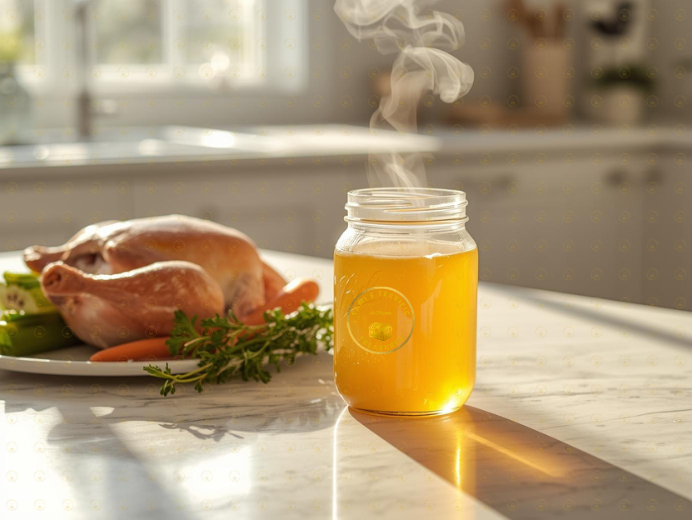
- 2-3 lbs chicken bones (ideally with some meat still on them, like a whole chicken carcass or backs)
- 2 carrots, roughly chopped
- 2 celery stalks, roughly chopped
- 1 onion, quartered
- 3 cloves garlic, smashed (optional for dogs)
- 1 tablespoon apple cider vinegar
- 10-12 cups filtered water
- Fresh parsley (optional, for a fresh flavor boost)
Directions:
- Prepare the Bones: Add the chicken bones and apple cider vinegar to a large pot or slow cooker. Cover with water.
- Simmer: Bring to a boil, then reduce heat and simmer for 6-12 hours, skimming off any impurities that rise to the surface.
- Add Vegetables: About 2 hours before the broth is done, add carrots, celery, onion, garlic, and parsley if using.
- Strain: After the simmering time, strain out the solids. Discard the bones and vegetables.
- Cool and Store: Let the broth cool. You’ll notice it may gel when refrigerated, indicating it’s full of collagen, which is great for joint and skin health.
Serving Suggestions:
- For humans, enjoy it as a warm drink or as a soup base.
- For dogs, serve it plain or pour it over dry kibble to make it more appetizing and hydrating.
3. Pork Bone Broth
Pork bones make a savory and nourishing broth, packed with minerals and collagen to support joint health, skin, and overall immunity. It’s a good option if you’re rotating proteins for variety.
Ingredients:
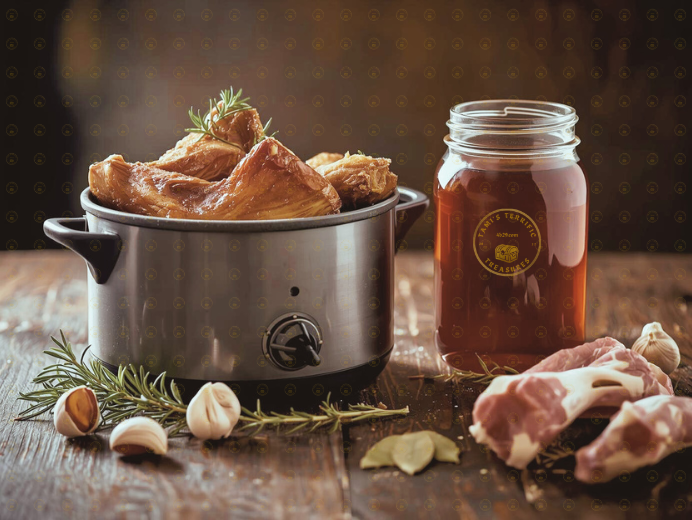
- 2-3 lbs pork neck bones or marrow bones
- 2 carrots, roughly chopped
- 2 celery stalks, roughly chopped
- 1 onion, quartered
- 3 cloves garlic, smashed (optional for dogs)
- 1 tablespoon apple cider vinegar
- 10-12 cups filtered water
- 1-2 bay leaves
- 1-2 sprigs fresh rosemary (optional for flavor)
Directions:
- Prepare the Bones: Place pork bones in your pot or slow cooker, add apple cider vinegar, and cover with water.
- Simmer: Bring to a boil and then reduce to a low simmer for 12–24 hours. Skim foam and impurities as needed.
- Add Vegetables: Add the carrots, celery, onion, garlic, bay leaves, and rosemary about 2-3 hours before the broth finishes cooking.
- Strain: After the broth is rich and full of flavor, strain out the bones and vegetables.
- Cool and Store: Let the broth cool completely, and store in jars or ice cube trays for easy portioning.
Serving Suggestions:
- For humans, enjoy as a soothing drink or a base for a variety of soups.
- For dogs, serve it as a treat or poured over their regular food.
Important Considerations for Dogs with Mast Cell Tumors:

- Anti-inflammatory Ingredients: The inclusion of bone marrow, collagen, and nutrients from the vegetables can help reduce inflammation, which may be beneficial for dogs with mast cell tumors.
- Low Sodium: Avoid adding extra salt. High sodium levels can contribute to health issues like high blood pressure.
- No Harmful Additives: Be mindful of certain ingredients that are toxic to dogs (e.g., onions, garlic in excess). If in doubt, omit them, as some dogs are more sensitive than others.
These broths can be stored in the fridge for up to 5 days or frozen for up to 3 months. Always ensure the broth is cooled to room temperature before serving it to your dog to prevent burns or digestive upset. If you would like to see more of my recipes then go see the Cooking section of this site.
Register on the right ===>>> for my Free e-newsletter or check back often to see what is new and tasty. Happy Cooking!